A smooth ERP go-live with a modern ERP system is rare. Together with Bodan GmbH in Überlingen, we achieved exactly that—through clear decisions, strong teamwork, and the courage to simplify.
A Familiar Situation
A NAV ERP system that has evolved over many years. Continuous customizations, expanding processes, and additional individual solutions. Over time, this creates a system that can do a great deal—but has also become highly complex. And when the idea of an update or migration arises, uncertainty often follows. What happens to existing customizations? How much effort will the migration require? And most importantly: is the move really worth it?
In food wholesale, additional challenges come into play. Requirements such as batch traceability, best-before date management, complex pricing structures, short-term availability, and the integration of purchasing and logistics processes mean that systems rarely remain simple.
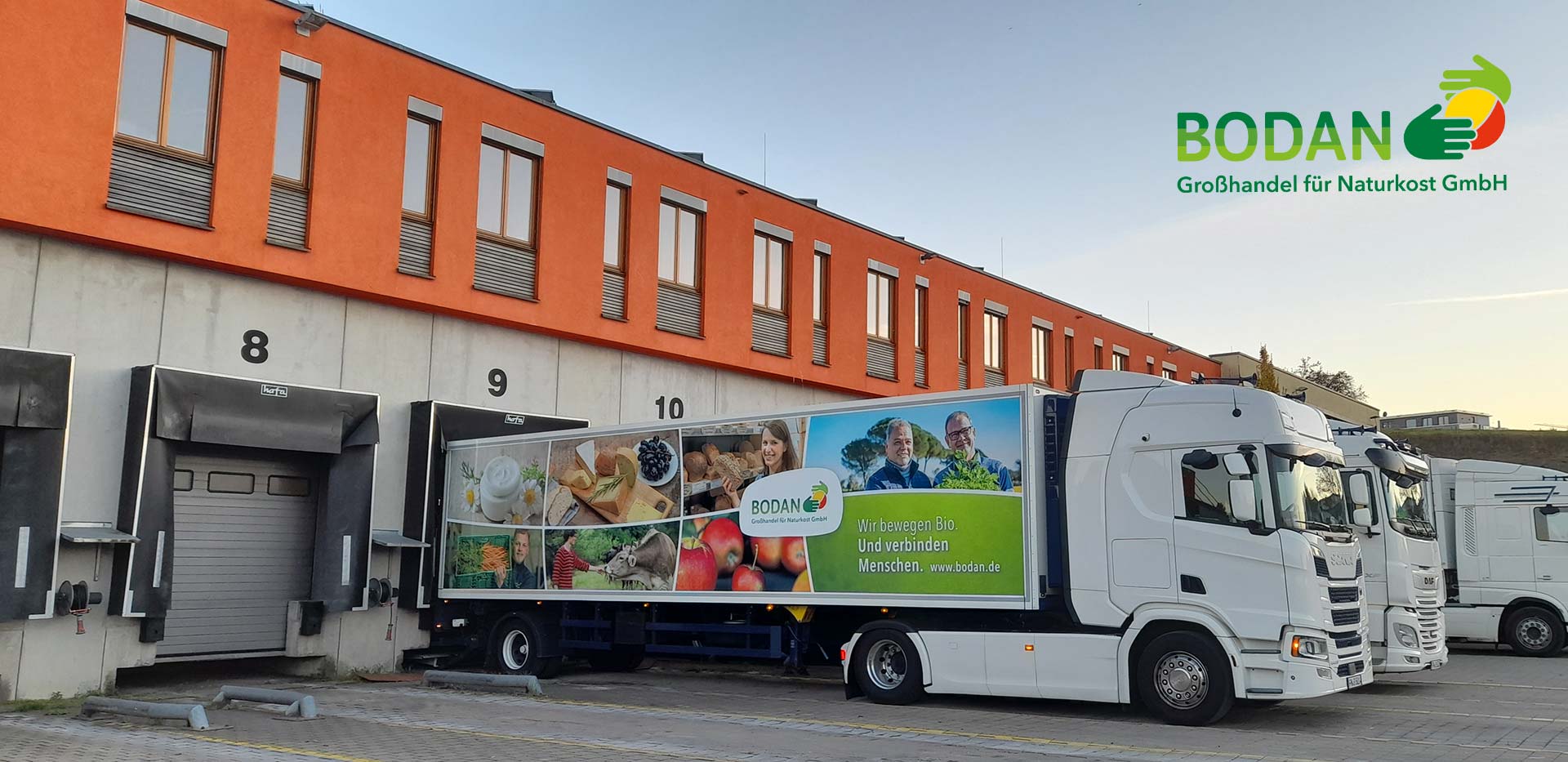
This was exactly the situation facing Bodan GmbH in Überlingen, a mid-sized company operating in the food wholesale sector.
A Deliberate Step Towards Change
Together, we decided not to follow the traditional upgrade path but to take a different approach. In an industry shaped by fluctuating availability, short-term orders, diverse supplier structures, and time-critical logistics, a well-structured Business Central environment is essential. Complexity cannot always be avoided—but it can be managed.
Rather than carrying existing structures over one-to-one, we took a step back and challenged which processes were truly necessary, where complexity could be reduced, and how modern ERP functionality could be used more effectively. The result was not a simple upgrade, but a fresh start based on Microsoft Dynamics 365 Business Central as the company’s integrated ERP platform.
Prototyping Instead of Theory
A key success factor was our approach of working with a real system as early as possible. Instead of spending months discussing concepts, we quickly built prototypes together with the Bodan team, allowing future processes to be experienced directly within the system.
This proved particularly valuable for areas such as pricing structures, availability management, deposit handling, batch tracking, and the mapping of purchasing and sales processes. Decisions could be made faster because the impact became visible immediately. This delivered two major benefits: decisions were reached more quickly, and it became clear at an early stage what would work in day-to-day operations—and what would not.
A Team Effort on Both Sides
As in many ERP projects, one topic played a central role: resources. There is no universal solution to this challenge. Every organization has its own priorities, constraints, and operational realities. In food wholesale especially, where day-to-day business often takes priority, running a transformation project at the same time requires careful planning and commitment.
This highlights something that is often underestimated in ERP projects: successful implementations are not just about systems and processes—they are about people. Team members become unavailable, operational priorities shift, and things rarely go exactly according to plan. That is part of reality. What matters is not whether everything runs perfectly, but how the project team responds when challenges arise.
Even more important was the fact that, together with the Bodan team, we found a practical way to deal with these realities. Through pragmatism, clear communication, and a shared understanding of the project goals, we kept the project moving forward. A key success factor was the clear commitment and ongoing support from management. Decisions were backed, priorities were set, and the project received active guidance throughout.
This combination of operational expertise and clear leadership played a major role in making the project successful. The outcome was a true team effort on both sides.
The Moment Before Go-Live
Like many larger ERP projects, this one reached a familiar stage: uncertainty shortly before go-live. Has everything been implemented? Will all processes work as intended? Have we considered every scenario? These questions often increase pressure within the project team. Decisions are revisited, and go-live dates are frequently postponed.
This project was no exception. There were delays—some driven by valid business considerations, others simply reflecting the uncertainty that naturally arises in projects of this size. Even when the final go-live decision was made, that uncertainty was still present. From our perspective, this is completely normal. The key factor is not whether uncertainty exists, but how the project team chooses to deal with it. At some point, a conscious decision has to be made: we are moving forward now.
With the understanding that not everything will be perfect. With the awareness that there will still be topics to address after go-live. And with the willingness to solve them together. This is where expectation management becomes essential. A go-live is not the finish line—it is the transition into day-to-day operations.
Many projects fail at exactly this point because the step is never taken. That made it all the more remarkable to see how both management and the entire team committed to moving forward together. With a clear mindset: We are going live. And whatever comes next, we will handle together. That is exactly how it turned out.
An Almost Seamless Go-Live
The go-live itself went exactly as everyone had hoped: almost without disruption. In an environment where orders, deliveries, and logistics processes must function reliably every day, a stable transition is essential. Of course, there were smaller issues that needed to be addressed, as there are in any project of this size. Overall, however, the transition to the new system was stable, well-structured, and fully manageable for the organization. For us, that is a strong indication that the right decisions were made throughout the project.
A Modern Foundation for the Future
With the successful go-live, Bodan GmbH now operates on a modern and scalable ERP platform based on Microsoft Dynamics 365 Business Central.
The system landscape is now significantly more structured. Business data is centrally available within the ERP system, processes are more transparent, and future requirements can be integrated with greater flexibility—whether through additional apps, Power Platform scenarios, new modules, or functions. This is particularly important in food wholesale, where requirements continue to evolve through new supplier structures, changing customer expectations, regulatory demands, and new digital services in the cloud.
Thank You for the Collaboration
A special thank you goes to the entire team at Bodan GmbH. Their openness, willingness to embrace change, and readiness to challenge existing structures were key success factors throughout the project. We would also like to recognize the commitment of the management team, which actively supported and championed the project from the very beginning. At the same time, we want to thank our own team, whose dedication, expertise, and sense of responsibility played a major role in making this go-live possible.
Projects like this demonstrate what can be achieved when both sides work together toward a common goal.
OTE. We make it happen.